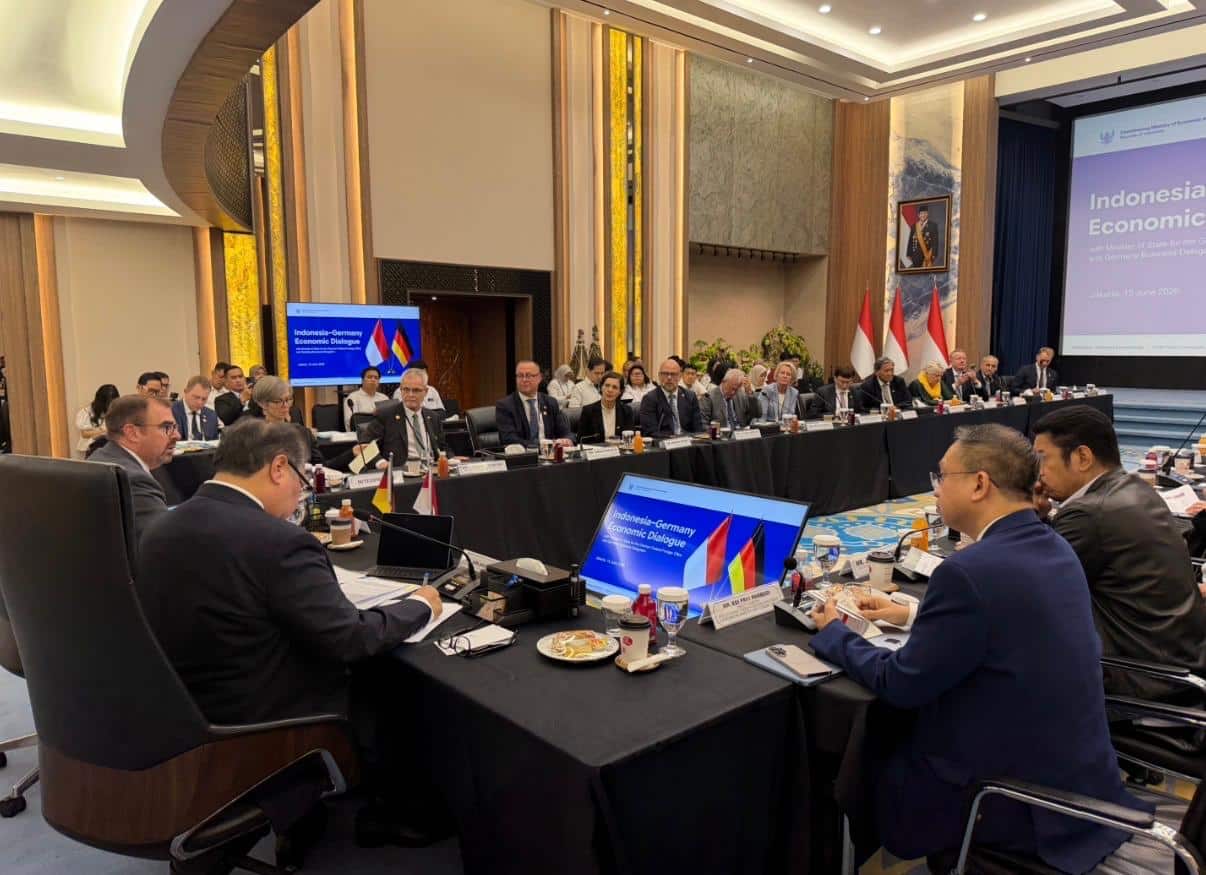

Three Asian countries, international forums, a state banquet, and numerous insightful political and economic discussions: In mid-June, Thomas Awiszus, Managing Director of Hanseatic Connect GmbH & Co. KG, accompanied Federal President Frank-Walter Steinmeier on his trip to Asia as part of the business delegation. He also participated in a panel discussion and gained many valuable experiences and insights.
The joint trip, which was also attended by First Lady Elke Büdenbender, began on June 14 in Indonesia, continued to the Philippines, and concluded on June 18 in Uzbekistan.
In Indonesia, President Prabowo Subianto hosted a state banquet. The following day, guests were invited by President Ferdinand Marcos Jr. to a luncheon at Malacañang Palace in Manila, Philippines. These events provided valuable opportunities for dialogue and exchange, while also highlighting the growing strategic importance of Southeast Asia for Germany’s economic future. Topics discussed included demographic change, labor market challenges, and increasing competition for skilled professionals.
Uzbekistan, the most populous country in Central Asia, also offers promising prospects for deeper economic and institutional cooperation with Germany, thanks to its young and dynamic population and increasing international openness.
“Trade, investment, and industrial cooperation remain key components of these relationships. At the same time, issues such as skills development and international labor mobility are becoming increasingly important,” says Awiszus.

Accordingly, these topics were also central to discussions at the Tashkent International Investment Forum, where Awiszus participated as a panelist. The forum was jointly organized by the German Eastern Business Association (Ost-Ausschuss der Deutschen Wirtschaft e.V.), AHK Central Asia / GFCC Central Asia, together with Minister Laziz Kudratov and Parliamentary State Secretary Stefan Rouenhoff.
“The trip to the Republic of Indonesia, the Republic of the Philippines, and the Republic of Uzbekistan clearly demonstrated the intensity with which Germany is strengthening existing partnerships and opening up new areas of cooperation. This approach is the right one and deserves recognition,” Awiszus summarizes.
However, he emphasizes that the real challenge is only just beginning: To effectively address demographic change and the growing shortage of skilled workers, existing partnerships must be further developed consistently.
“Reliable political frameworks, more efficient processes, the sustainable implementation of existing programs, and close cooperation between government, business, and educational institutions will be crucial,” says Awiszus.
Another key factor is the acceptance of skilled immigration in Germany.
“Ultimately, the success of international skilled labor partnerships will depend on whether we can maintain broad societal consensus that international professionals are a vital part of the solution to Germany’s demographic and economic challenges—and that qualified immigration remains essential for maintaining our competitiveness and prosperity,” Awiszus concludes.


About Hanseatic Connect
Hanseatic Connect is a global human resources company specializing in the international recruitment and training of professionals for essential sectors. Its core focus lies in selecting, qualifying, and integrating talent for employers in the healthcare, hospitality, and catering industries.
The company’s services range from strategic recruitment and employee leasing to payroll and administrative support, while also assisting professionals and their families with integration, visa processing, housing search, and other administrative matters. As part of the SCHULTE GROUP, Hanseatic Connect benefits from an operational network in over 30 countries.


